Prep Time: 20 minutes Cook Time: 25 minutes Total Time: 45 minutes Serves: 8
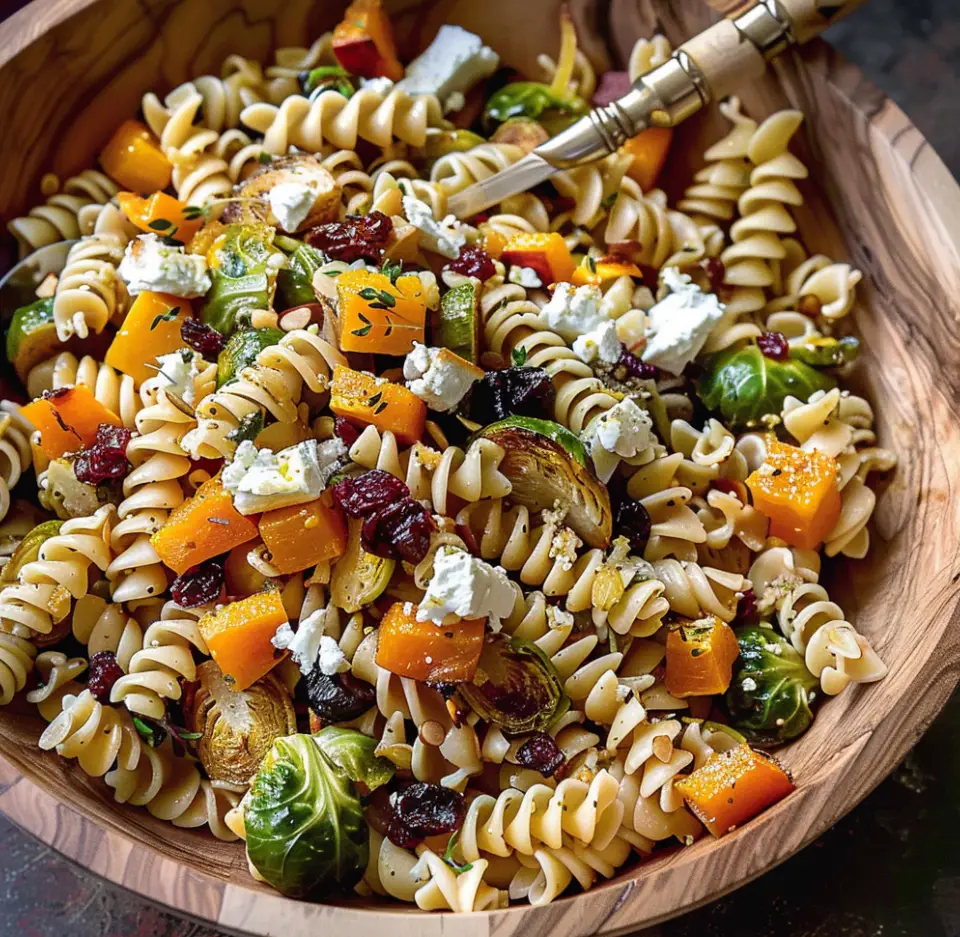
Welcome autumn to your table with this extraordinary fall pasta salad that captures the essence of the season because it combines roasted butternut squash, crispy Brussels sprouts, sweet cranberries, and crunchy pecans in one magnificent bowl. This spectacular fall pasta salad delivers everything you crave in seasonal eating because it features warm spices, maple-sweetened dressing, and tender pasta that creates the perfect balance of textures and flavors guaranteed to become your new favorite autumn dish.
Why Fall Pasta Salad Celebrates the Season
This remarkable fall pasta salad succeeds brilliantly because it transforms traditional summer pasta salad into a cozy, harvest-inspired dish that celebrates autumn’s bounty. The roasted vegetables provide exceptional depth because high heat caramelizes natural sugars in squash and Brussels sprouts, creating sweet, nutty flavors that contrast beautifully with tart dried cranberries and tangy vinaigrette.
The genius of this fall pasta salad lies in its incredible versatility because it works equally well as a hearty side dish for Thanksgiving, a satisfying lunch throughout the week, or a crowd-pleasing contribution to potlucks and gatherings. The combination of warm and cool elements creates perfect harmony because freshly roasted vegetables tossed with cool pasta, crisp apples, and creamy goat cheese deliver multiple temperature sensations in each bite.
This beloved fall pasta salad appeals universally because it satisfies comfort food cravings while offering nutritious seasonal produce presented in exciting format. The recipe demonstrates how simple roasting techniques and strategic ingredient selection transform ordinary pasta salad because attention to texture, color, and flavor creates restaurant-quality results at home.
Essential Ingredients for Perfect Fall Pasta Salad
For the Pasta Base:
- 1 pound bowtie pasta or rotini
- 2 tablespoons olive oil for tossing
- 1 teaspoon salt for pasta water
For the Roasted Vegetables:
- 3 cups butternut squash, peeled and diced into 1/2-inch cubes
- 2 cups Brussels sprouts, trimmed and halved
- 1 medium red onion, diced
- 3 tablespoons olive oil
- 1 teaspoon salt
- 1/2 teaspoon black pepper
- 1/2 teaspoon garlic powder
For the Fresh Components:
- 2 cups baby spinach or arugula
- 1 large Honeycrisp apple, diced
- 1 cup dried cranberries
- 1 cup pecans, toasted and chopped
- 4 ounces goat cheese, crumbled
- 1/4 cup fresh thyme leaves
For the Maple Dijon Vinaigrette:
- 1/3 cup olive oil
- 1/4 cup apple cider vinegar
- 2 tablespoons pure maple syrup
- 2 tablespoons Dijon mustard
- 1 clove garlic, minced
- 1/2 teaspoon salt
- 1/4 teaspoon black pepper
The Art of Creating Fall Pasta Salad
Mastering this divine fall pasta salad requires understanding the relationship between roasting techniques, pasta preparation, and dressing application because success depends on achieving properly caramelized vegetables, perfectly cooked pasta, and strategic dressing timing. The vegetable roasting proves crucial because high heat and adequate spacing on the baking sheet create browning that develops complex flavors impossible to achieve through other cooking methods.
The pasta cooking demands careful attention because al dente texture ensures the pasta maintains structure when dressed and refrigerated, while overcooked pasta becomes mushy and absorbs too much dressing. The dressing incorporation timing matters significantly because dressing warm pasta helps absorption while adding more dressing before serving refreshes flavors and prevents dryness.
Temperature management becomes essential because this fall pasta salad tastes best at cool room temperature rather than ice-cold from the refrigerator. The layering of flavors requires strategy because balancing sweet elements like maple syrup and cranberries against savory components like goat cheese and Dijon mustard creates the complex taste profile that makes this dish memorable.
Step-by-Step Instructions for Fall Pasta Salad
Step 1: Prepare and Roast Vegetables
Preheat oven to 425°F and line a large baking sheet with parchment paper because proper preparation prevents sticking and facilitates cleanup. Peel butternut squash and cut into uniform 1/2-inch cubes because consistent sizing ensures even cooking and attractive presentation.
Professional Tip: Trim Brussels sprouts and halve them lengthwise because cut-side-down placement on the baking sheet creates maximum surface contact for superior caramelization.
Key Points: Toss vegetables with olive oil, salt, pepper, and garlic powder because thorough coating promotes even browning and flavor development throughout the roasting process.
Step 2: Roast Until Golden
Spread vegetables in a single layer with adequate space between pieces because crowding creates steam rather than roasting, preventing proper caramelization. Roast for 20-25 minutes, stirring halfway through because this ensures even browning on all surfaces.
Professional Tip: The vegetables are done when golden brown at the edges and fork-tender throughout because this indicates proper cooking and flavor development.
Key Points: Remove from oven and allow to cool slightly because adding very hot vegetables to delicate greens causes wilting, while completely cold vegetables work fine.
Step 3: Cook the Pasta
Bring a large pot of generously salted water to a rolling boil because proper seasoning during cooking is the only opportunity to season the pasta itself. Cook pasta according to package directions minus 1-2 minutes because al dente texture maintains structure in dressed salads.
Professional Tip: Reserve 1/2 cup pasta cooking water before draining because this starchy liquid can help thin dressing if needed and improves sauce adhesion.
Key Points: Drain pasta and immediately toss with 2 tablespoons olive oil because this prevents sticking and makes mixing easier later.
Step 4: Prepare Fresh Components
Dice apple into 1/2-inch pieces and toss with a squeeze of lemon juice because acid prevents browning and maintains attractive appearance. Wash and dry greens thoroughly because excess water dilutes dressing and creates soggy salad.
Professional Tip: Toast pecans in a dry skillet over medium heat for 3-4 minutes because this intensifies their nutty flavor and creates superior crunch.
Key Points: Prepare all components before assembly because organized mise en place streamlines the process and ensures nothing gets forgotten.
Step 5: Make the Vinaigrette

Combine olive oil, apple cider vinegar, maple syrup, Dijon mustard, minced garlic, salt, and pepper in a jar with a tight-fitting lid because this allows vigorous shaking that creates proper emulsion. Shake vigorously for 30 seconds because thorough mixing creates cohesive dressing rather than separated oil and vinegar.
Professional Tip: Taste the dressing and adjust seasoning because personal preference varies, and now is the time to add more maple for sweetness or mustard for tang.
Key Points: Make the dressing ahead if desired because flavors actually improve when allowed to meld for several hours or overnight in the refrigerator.
Step 6: Dress the Warm Pasta
Transfer warm pasta to a very large serving bowl and drizzle with about 1/3 of the vinaigrette because dressing warm pasta allows better absorption and prevents blandness. Toss gently but thoroughly because even distribution ensures flavor throughout.
Professional Tip: Allow dressed pasta to cool to room temperature because this prevents wilting greens and melting cheese when other ingredients are added.
Key Points: The pasta will absorb much of this initial dressing because starches continue hydrating as it cools, so don’t worry about it appearing too wet initially.
Step 7: Add Greens First
Add baby spinach or arugula to the cooled pasta and drizzle with a few drops of dressing because lightly coating greens before adding other ingredients helps them maintain structure. Toss gently because you want to incorporate greens throughout without bruising or wilting them excessively.
Professional Tip: Use sturdy greens like baby spinach or arugula because delicate lettuces wilt too quickly and don’t hold up well in dressed salads.
Key Points: The greens should be evenly distributed because this ensures every serving contains vegetables rather than having them settle at the bottom.
Step 8: Incorporate Roasted Vegetables
Add cooled roasted butternut squash, Brussels sprouts, and red onion to the bowl because these substantial ingredients provide heartiness and seasonal flavor. Fold gently rather than stirring vigorously because you want to keep the squash pieces intact rather than mashing them.
Professional Tip: Reserve a few pretty pieces of roasted squash for garnishing the top because this creates visual appeal and indicates the salad’s flavor profile.
Key Points: The roasted vegetables should still be slightly warm or at room temperature because this creates appealing temperature contrast with the cooler components.
Step 9: Add Remaining Components
Fold in diced apple, dried cranberries, toasted pecans, and fresh thyme leaves because these additions provide sweetness, crunch, and aromatic complexity. Add about half the remaining dressing and toss gently because proper coating ensures flavor in every bite.
Professional Tip: Add pecans just before serving if making ahead because this preserves their crunch, as they soften when sitting in dressing.
Key Points: Reserve the goat cheese until the very end because its soft texture crumbles easily and needs gentle handling to maintain attractive pieces.
Step 10: Finish and Serve
Crumble goat cheese over the top and add final drizzle of dressing because these finishing touches add richness and ensure adequate moisture. Garnish with reserved roasted squash pieces and extra thyme sprigs because attractive presentation enhances the dining experience.
Professional Tip: Let the finished fall pasta salad sit at room temperature for 15-30 minutes before serving because this allows flavors to meld and takes the chill off refrigerated ingredients.
Key Points: Serve with remaining dressing on the side because individual preferences vary regarding how heavily dressed they prefer their salad.
Professional Tips for Perfect Fall Pasta Salad
Choose pasta shapes with nooks and crannies like bowtie, rotini, or cavatappi because these trap dressing and small ingredients, ensuring flavor in every bite. Cut all vegetables uniformly because consistent sizing promotes even cooking and creates professional appearance.
Toast nuts before adding because this simple step dramatically improves flavor and creates superior texture that distinguishes homemade from store-bought. Make this fall pasta salad ahead by preparing all components separately because assembly just before serving maintains optimal texture and prevents sogginess.
Bring the salad to room temperature before serving because cold pasta tastes muted and the texture is less appealing than slightly warmed. Double the dressing recipe because having extra ensures you can refresh the salad before serving if it appears dry after refrigeration.
Creative Variations for Fall Pasta Salad
Transform this classic fall pasta salad into exciting alternatives because customization accommodates different tastes and dietary preferences. Try substituting sweet potatoes for butternut squash because their natural sweetness and creamy texture create different but equally delicious results.
Add protein like roasted chicken, turkey, or chickpeas because these additions transform the side dish into a complete meal suitable for lunch or light dinner. Experiment with different cheeses like sharp cheddar or feta because each variety creates unique flavor profiles while maintaining the essential fall character.
Create vegan versions using maple syrup instead of honey and omitting cheese because plant-based eaters deserve delicious seasonal options. For nut-free versions, substitute roasted pumpkin seeds because these provide similar crunch without allergen concerns.
Perfect Pairing Ideas for Fall Pasta Salad
This hearty fall pasta salad pairs beautifully with various main courses because versatility makes it suitable for numerous occasions. Serve alongside other refreshing salad options because variety creates more interesting meals and accommodates different preferences.
Consider offering elegant snacks and appetizers before the main course because lighter starters prepare appetites for substantial salads. Include carefully selected perfect side dishes because additional options create complete, satisfying meals for gatherings.
Pair with roasted turkey, pork tenderloin, or grilled chicken because this fall pasta salad complements rich proteins perfectly. Include crusty bread and flavored butter because these accompaniments add substance and allow guests to soak up delicious dressing.
Discover More Seasonal Favorites
Expand your autumn cooking repertoire with complementary recipes because mastering seasonal dishes builds confidence and showcases fresh ingredients. Explore creative savory side preparations because robust fall accompaniments create complete, satisfying meals.
Enhance your cooking with flavorful dips and marinades because versatile sauces add excitement to simple preparations across all seasons. Include refreshing beverage selections because well-chosen drinks balance rich foods and enhance overall dining experiences.
Consider morning meal breakfast favorites because autumn flavors translate beautifully to breakfast dishes, creating cohesive seasonal menus.
Storage Guidelines for Fall Pasta Salad
Proper storage techniques preserve both flavor and texture because this fall pasta salad remains delicious for days when handled correctly. Store in airtight containers for up to 4 days because proper sealing prevents drying and maintains freshness.
Keep dressing separate if making more than a day ahead because pasta continues absorbing dressing during storage, so reserving some for refreshing ensures optimal moisture. Remove from refrigerator 15-30 minutes before serving because room temperature pasta tastes better and the texture is more appealing.
Avoid freezing this fall pasta salad because freezing damages vegetable texture and causes dressing separation upon thawing. Refresh leftovers with additional dressing and fresh herbs because this restores vibrancy to day-old salad.
The Science Behind Perfect Fall Pasta Salad
Understanding starch behavior improves results because knowledge of how pasta absorbs liquid helps optimize dressing quantities and timing. Pasta starch gelatinizes during cooking because heat causes granules to absorb water and swell, creating the tender texture.
The roasting process develops flavor through Maillard reaction and caramelization because high heat causes amino acids and sugars to react, creating complex taste compounds. The vinegar in dressing serves multiple purposes because acid brightens flavors while preventing oxidation that causes apples and greens to brown.
Emulsification creates stable dressing because mustard acts as emulsifier that helps oil and vinegar stay combined rather than separating into distinct layers.
Troubleshooting Common Fall Pasta Salad Issues
Soggy vegetables result from overcrowding the baking sheet because proper spacing allows moisture to evaporate rather than creating steam that prevents browning. Use multiple baking sheets if necessary because achieving proper roasting requires adequate space.
Dry, bland pasta happens when under-seasoned during cooking or insufficient dressing because proper salt in cooking water and generous dressing application create flavorful results. Taste and adjust because these corrections ensure delicious outcomes.
Wilted greens occur when adding them to hot components or dressing too early because heat and extended contact with acid causes breakdown. Add greens last and dress gently because these precautions maintain their fresh, crisp texture.
Additional Autumn Recipe Inspirations
Continue exploring seasonal cooking because autumn offers abundant produce perfect for creative dishes. Consider sweet endings with delightful dessert recipes because fall desserts featuring apples, pumpkin, and warm spices complement savory salads beautifully.
Build confidence with similar grain-based salads because the principles learned here translate to quinoa, farro, and rice salads. Remember that seasonal cooking celebrates ingredient quality because fresh, local produce at peak ripeness provides superior flavor and nutrition.
Conclusion
This magnificent fall pasta salad represents the perfect celebration of autumn’s bounty because it transforms seasonal vegetables, fruits, and nuts into a spectacular dish that satisfies both visually and gastronomically. The combination of roasted vegetables, sweet cranberries, crunchy pecans, and tangy dressing creates unforgettable flavor experiences because each component contributes unique characteristics that harmonize beautifully.
Whether preparing Thanksgiving sides, weeknight dinners, or potluck contributions, this fall pasta salad guarantees success because the straightforward technique produces consistently delicious results that impress without requiring advanced culinary skills. The recipe’s flexibility encourages creativity because ingredient substitutions and flavor variations allow personalization while maintaining the essential autumn character that makes seasonal salads comforting, nutritious, and absolutely unforgettable.